When people imagine the perfect wig, they often picture every hair sitting exactly where it should: a flawlessly even hairline, perfectly uniform density, and colour that is completely consistent from root to end.
But here is the irony: real hair is not perfect.
If your goal is for a wig to look like beautiful, naturally growing hair, sometimes a little imperfection is exactly what makes it believable.
Natural Hair Has Variation
Look closely at someone’s natural hair and you will notice that it is not completely uniform.
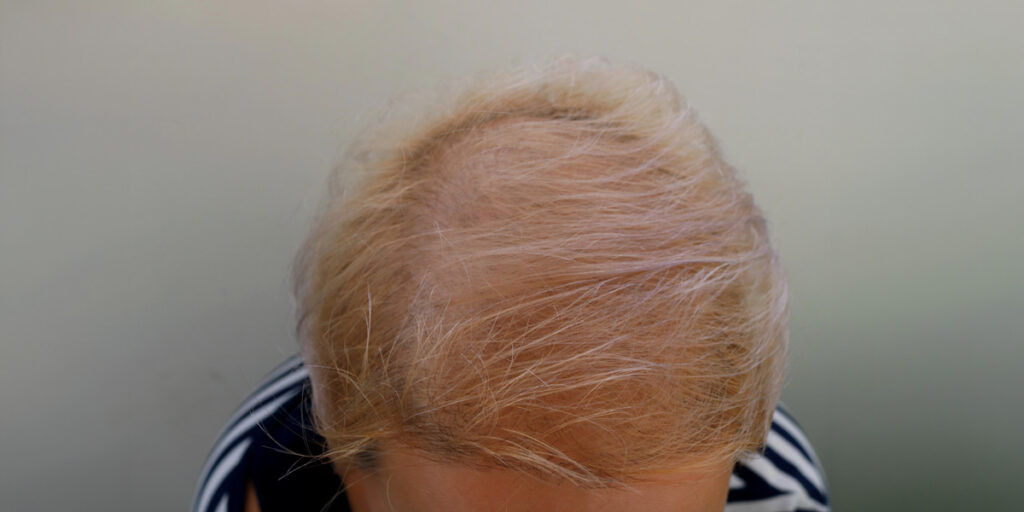
Density varies across the scalp. The hairline is not perfectly symmetrical. There are finer hairs around the temples and forehead. Some hairs are shorter than others. Even natural colour contains subtle variations in tone.
These tiny inconsistencies are part of what our eyes recognise as real.
When a wig is too uniform—too dense, too symmetrical, or too perfectly coloured—it can actually draw attention to itself. You may not immediately know what looks unnatural, but something simply feels “off.”
A Natural Hairline Is Never a Straight Line
One of the biggest giveaways of a wig can be an overly perfect hairline.
Natural hairlines have subtle irregularities. Density changes around the forehead and temples, and fine baby hairs often soften the transition between the skin and the fuller hair behind it.
Creating a beautiful wig hairline therefore is not simply about using the finest lace. It is about understanding how natural hair actually grows and recreating that effect.
Sometimes that means deliberately not making everything perfect.
More Hair Is Not Always Better
Another misconception is that an expensive wig should contain lots of hair.
In reality, excessive density is one of the quickest ways to make a wig look unnatural.
Most women do not have exactly the same density throughout their scalp. The hair is generally finer around the hairline and temples, while other areas naturally carry more volume.
A skilled wig maker takes these variations into account.
In fact, when customising a wig, we often spend considerable time removing hair rather than adding it. Carefully reducing bulk and density can transform a beautiful wig into one that genuinely looks as though the hair is growing from the client’s own scalp.
Beautiful Colour Should Have Dimension
Natural hair colour is rarely one flat shade.
Even brunette hair may contain warmer and cooler strands. Blonde hair can include numerous subtle shades, while naturally grey hair may contain silver, white, charcoal, and remnants of the person’s original colour.
This is one reason the best European human hair wigs can look so extraordinary. Beautiful European hair allows us to work with the hair’s natural movement, texture, and tonal variation rather than trying to create an overly uniform result.
When colour has subtle dimension, the eye sees depth—and depth helps create realism.
Movement Matters Too
Real hair moves.
Individual strands separate, fall differently, and respond naturally to styling and movement. A wig should not behave like one perfectly controlled mass of hair.
High-quality real hair wigs should have softness and movement. When you turn your head, run your fingers through your hair, or step outside into a breeze, the hair should behave naturally.
That seemingly effortless movement is actually one of the hallmarks of an exceptional wig.
The Goal Is Not Perfection. It Is Believability.
At Paula’s Wig Boutique, we do not believe the ultimate compliment is, “What a beautiful wig.”
We would much rather someone say, “Your hair looks beautiful.”
There is an important difference.
Creating an exceptionally natural wig means understanding when to add hair—and when to remove it. It means knowing when to perfect something and when a tiny irregularity makes it more realistic. It means looking beyond the wig itself and considering the woman who will actually be wearing it.
Because the very best wig should not announce itself.
It should simply look like your hair. Book a complimentary consultation to explore a naturally beautiful wig created for you.